
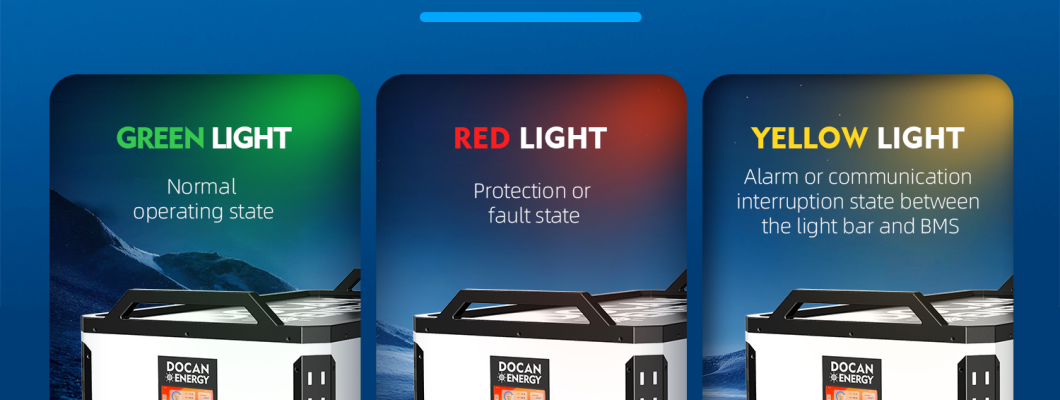
Many customers ask the same question before buying a large home battery bank: can a 48kWh battery power a whole house?
The short answer is: a 48kWh LiFePO4 battery can support many whole-house backup and off-grid systems, but the real runtime depends on the home load, inverter size, solar input and how the system is designed.
Battery capacity is important, but it is not the only factor.
1. What Does 48kWh Mean?
48kWh means the battery can store about 48 kilowatt-hours of energy. In simple terms, it is a large energy storage capacity for residential ESS, off-grid solar systems and backup power projects.
For example, if a home uses 2kW continuously, a 48kWh battery could theoretically support that load for about 24 hours. If the home uses 4kW continuously, the runtime is closer to 12 hours.
In real systems, runtime is affected by inverter efficiency, battery settings, depth of discharge, temperature and load changes during the day.
2. What Loads Can a 48kWh Battery Support?
A 48kWh battery can support many common household loads, such as lighting, refrigerator, internet equipment, TV, washing machine, small appliances, water pump and some air conditioning loads.
However, high-power loads need careful planning. Electric ovens, large air conditioners, heaters, EV chargers and well pumps can draw a lot of current when starting or running.
For these loads, the inverter size and surge capacity are just as important as the battery capacity.
3. Battery Capacity vs Inverter Power
One common misunderstanding is thinking that a larger battery automatically means the system can run any appliance.
The battery stores energy. The inverter decides how much power can be delivered at one time.
For example, a 48kWh battery connected to a small inverter may have a long runtime but cannot run many high-power loads at the same time. A larger inverter can support higher loads, but it also requires proper battery current capability, cables, breaker and busbar design.
4. How Long Can It Run a House?
The best way to estimate runtime is to look at daily energy usage.
- If a home uses around 10kWh per day, 48kWh can provide several days of backup for essential loads.
- If a home uses around 20kWh per day, 48kWh may provide about two days under controlled load usage.
- If a home uses 40kWh or more per day, runtime may be close to one day without solar charging.
With solar panels charging during the day, the system runtime can be much longer. Without solar input, the battery is limited by stored energy only.
5. Whole-House Backup or Essential-Load Backup?
Before buying a 48kWh battery, customers should decide whether they want true whole-house backup or essential-load backup.
Whole-house backup means the system may support most home circuits, but this requires a suitable inverter, transfer switch, protection design and load management.
Essential-load backup focuses on the most important loads, such as refrigerator, lights, internet, water pump, security system and selected outlets. This usually gives longer runtime and a more stable system.
6. Why Installation Design Matters
A 48kWh battery is a high-capacity system. The installation should not be planned only by battery size.
The installer should check cable size, DC breaker, terminal connection, ventilation, inverter compatibility, communication protocol and local electrical requirements.
If the system needs high current output, the battery pack, inverter and DC wiring must all be designed for that current safely.
7. Is Panda 48kWh Suitable for Whole-House Energy Storage?
Docan Panda 48kWh is designed for large residential energy storage, off-grid solar systems, backup power and other high-capacity LiFePO4 battery applications.
It is a good option for customers who want one integrated battery bank instead of many smaller battery modules.
Before ordering, customers should confirm inverter model, expected loads, installation space, wiring plan and warehouse availability.
Recommended Buying Advice
If your goal is whole-house backup, send Docan your inverter model and main load list before purchase. This helps confirm whether the Panda 48kWh battery pack is suitable and whether the current settings, communication method and installation design are correct.
Product link: Docan Panda 51.2V 942Ah 48kWh LiFePO4 Battery Pack
Conclusion
A 48kWh battery can power many whole-house backup systems, but the real answer depends on the house load, inverter power, solar charging and installation design.
For large home ESS projects, Panda 48kWh can provide strong capacity in one integrated LiFePO4 battery pack.
For compatibility confirmation or bulk orders, contact Jenny:
WhatsApp: wa.me/8613537721971
Email: jenny@docantech.com
Leave a Comment